Sean Gibbons
Assessment and Rehabilitation by Sean Gibbons
El movimiento es la base de la rehabilitación fisioterapéutica. Un subgrupo de pacientes tiene muy mala coordinación y esto interfiere con la rehabilitación tradicional. Otros pacientes simplemente parecen tener tensión o un aumento del tono en los músculos que no desaparece. Esto frecuentemente se debe a reflejos primitivos retenidos.
La inhibición del reflejo primitivo es una estrategia muy suave y fácil de usar que se puede aplicar de inmediato en la clínica.
Los reflejos primitivos (RP) son patrones de movimiento automáticos complejos mediados por el tronco del encéfalo que comienzan en el útero. Si hay PR, influirán en el control motor normal y pueden interferir con la rehabilitación normal. Existen numerosas causas por las que la PR está presente en adultos neurológicamente intactos (por ejemplo, antecedentes de nacimiento atípicos o hitos del desarrollo, especialmente caminar y gatear; conmoción cerebral). Se sabe que numerosas afecciones han conservado reflejos primitivos (por ejemplo, trastorno por déficit de atención e hiperactividad, trastorno del desarrollo de la coordinación, dislexia, adicciones, escoliosis, diabetes, dolor lumbar crónico, dolor crónico de hombro, trastornos asociados al latigazo cervical crónico, síndrome posconmoción cerebral, accidente cerebrovascular, lesión en la cabeza). ).
El tratamiento de los reflejos primitivos se puede utilizar clínicamente de diferentes formas para:
✅ Reducir el tono muscular individual en músculos crónicamente cortos (por ejemplo, isquiotibiales, gastrocnemios)
✅ Aumentar el rango de movimiento (p. ej., flexión cervical superior, rotación medial de la articulación glenohumeral)
✅ Mejorar la coordinación general (p. ej., torpeza, propiocepción, estabilidad postural)
✅ Abordar problemas específicos (por ejemplo, caminar de puntillas, algunas tortícolis)
✅ Facilitar la rehabilitación del suelo pélvico (por ejemplo, asimetría del suelo pélvico)
✅ Mejorar las imágenes motoras (p. ej., déficits de imagen corporal musculoesquelética y de la línea media)
✅ Normalizar el tono muscular (por ejemplo, accidente cerebrovascular)
Durante este curso de tres días cubriremos la evaluación y rehabilitación de PR en detalle. Se cubrirán estrategias de tratamiento en la clínica y ejercicio en el hogar. Se utilizarán ejemplos específicos para mostrar cómo la inhibición de reflejos primitivos puede mejorar inmediatamente el movimiento y el control motor.
El material del curso tiene otros usos en neurología, conmoción cerebral, pediatría y para ayudar a los clientes habituales a aprender ejercicios más rápidamente.
No hay prerequisitos para este curso
IMPORTANTE: El curso se imparte en inglés con traducción consecutiva al español. Apuntes en formato digital.

Movement is a foundation of physiotherapy rehabilitation. A sub group of patients have very poor coordination and this interferes with traditional rehab. Other patients just seem to have tightness or increased tone in muscles that does not go way. This is frequently due to a retained primitive reflexes.
Primitive reflex inhibition is very gentle and easy to use strategies that can be applied right away in the clinic.
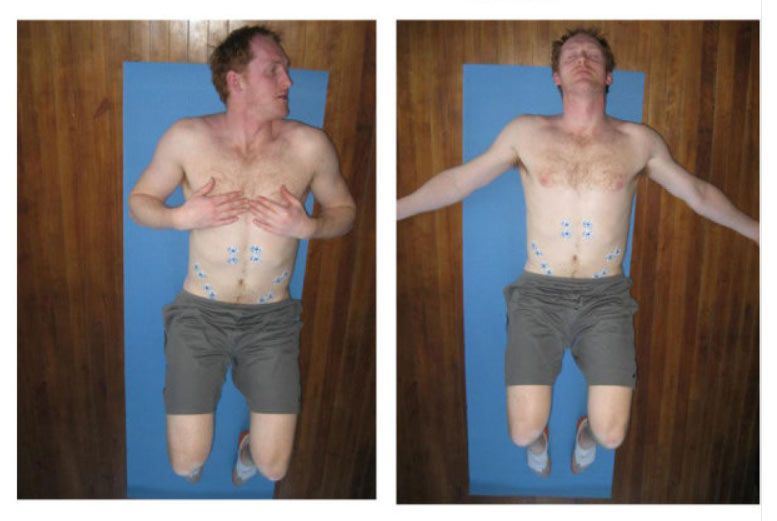
Primitive reflexes (PR) are brain stem-mediated, complex automatic movement patterns that commence in utero. If PR are present they will influence normal motor control and can interfere with normal rehabilitation. There are numerous causes of PR being present in neurologically intact adults (e.g. atypical birth history or developmental milestones especially walking and crawling; concussion). Numerous conditions are known to have retained primitive reflexes (e.g. Attention Deficit Hyperactivity Disorder, Developmental Coordination Disorder, dyslexia, addictions, scoliosis, diabetes, chronic low back pain, chronic shoulder pain, chronic whiplash associated disorders, post concussion syndrome, stroke, head injury).
The treatment of primitive reflexes can be used clinically in different ways to:
✅ Reduce individual muscle tone in chronically short muscles (e.g., hamstrings, gastrocnemius)
✅ Increase range of motion (e.g., upper cervical flexion, glenohumeral joint medial rotation)
✅ Improve general coordination (e.g., clumsiness, proprioception, postural stability)
✅ Target specific problems (e.g., toe walkers, some torticollis)
✅ Facilitate pelvic floor rehab (e.g., pelvic floor asymmetry)
✅ Improve motor imagery (e.g., midline and musculoskeletal body image deficits)
✅ Normalize muscle tone (e.g., stroke)
During this three day course we will cover the assessment and rehabilitation of PR in detail. Strategies for treatment in the clinic and home exercise will be covered. Specific examples will be used to show how primitive reflex inhibition can immediately improve movement and motor control.
The course material has other uses for neurology, concussion, pediatrics and in helping regular clients learn exercises more quickly.
There are no pre-requisites for this course
IMPORTANT: The course is taught in English with consecutive translation into Spanish. Notes in digital format.
0DURACIÓN: 20 horas
PLAZAS: 24
DIRIGIDO A: Fisioterapeutas y estudiantes de fisioterapia
LUGAR: Centre Univers: Calle Comte de Salvatierra, 5-15 – 08006 Barcelona
CALENDARIO:
Del 31 de Mayo al 02 de Junio de 2024
HORARIO:
Descuentos:
Matrícula abierta hasta fin de plazas
COMO MATRICULARSE
1.- Cumplimentar Inscripción
2.- Pago de INSCRIPCIÓN 350€ por tarjeta. Resto según calendario de pagos por transferencia a ES2000810646340001361838 – SWIFT/BIC BSABESBB – Kenzen Formacion S.L. o en efectivo según se indica
3.- Seguir indicaciones y cumplimentar el calendario de pagos
Calendario de pagos:
*por transferencia o en efectivo el día del inicio del seminario
Recomendación:
En caso de que por motivo del curso debas incurrir en algún gasto de desplazamiento y alojamiento, sugerimos esperar hasta que se confirme el curso en cuestión. La organización no se hace responsable de dichos gastos y puede cancelar el curso hasta 5 días antes de su realización.
Objetivos
✅ Comprender el papel de los reflejos primitivos en el tono muscular y el control motor.
✅ Evaluar y rehabilitar reflejos primitivos.
✅ Realice una historia subjetiva para ayudar a identificar a los pacientes que se beneficiarán de la inhibición del reflejo primitivo.
✅ Resuelve el problema del razonamiento clínico del uso de la inhibición del reflejo primitivo.
✅ Prescribir ejercicios caseros para reflejos primitivos.
Programa
Día 1
10:00 – 11:30 Desregulación neurológica menor en el dolor musculoesquelético
11:30 – 12:00 Descanso
12:00 – 13:30 Evaluación y rehabilitación de reflejos del tronco
13:30 – 14:30 Almuerzo
14:30 – 16:30 Evaluación y rehabilitación de reflejos del tronco
16:30 – 16:45 Descanso
16:45 – 18:00 Continuación de reflejos del tronco
Dia 2
09:00 – 10:30 Continuación de reflejos del tronco
10:30 – 11:00 Descanso
11:00 – 13:30 Evaluación y rehabilitación de reflejos de las extremidades inferiores.
13:30 – 14:30 Almuerzo
14:30 – 15:45 Evaluación y rehabilitación de reflejos de las extremidades superiores.
15:45 – 16:00 Descanso
16:00 – 18:00 Evaluación y rehabilitación de reflejos de las extremidades superiores (continuación)
Día 3
09:00 – 10:30 Evaluación y rehabilitación de reflejos faciales y oculares.
10:30 – 11:00 Descanso
11:00 – 12:00 Reflejos posturales: introducción a la evaluación y rehabilitación
12:00 – 13:00 Resolución de problemas: uso de reflejos primitivos para patrones de movimiento y tono muscular
13:00 – 14:00 Estudios de casos, Integración clínica, Revisión y resumen
Metodología
El curso será teórico-práctico.
Objectives
✅ Understand the role of primitive reflexes in muscle tone and motor control
✅ Assess and rehabilitate primitive reflexes
✅ Take a subjective history to help identify patients who will benefit from primitive reflex inhibition
✅ Problem solve the clinical reasoning of the use of primitive reflex inhibition
✅ Prescribe home exercises for primitive reflexes
Program
Day 1
10:00 – 11:30 Minor Neurological Dysregulation in Musculoskeletal Pain
11:30 – 12:00 Break
12:00 – 13:30 Trunk reflexes assessment & rehabilitation
13:30 – 14:30 Lunch
14:30 – 16:30 Trunk reflexes assessment & rehabilitation
16:30 – 16:45 Break
16:45 – 18:00 Trunk reflexes continued
Day 2
09:00 – 10:30 Trunk reflexes continued
10:30 – 11:00 Break
11:00 – 13:30 Lower limb reflexes assessment & rehabilitation
13:30 – 14:30 Lunch
14:30 – 15:45 Upper limb reflexes assessment & rehabilitation
15:45 – 16:00 Break
16:00 – 18:00 Upper limb reflexes assessment & rehabilitation (continued)
Day 3
09:00 – 10:30 Facial and Eye reflexes assessment & rehabilitation
10:30 – 11:00 Break
11:00 – 12:00 Postural Reflexes: introduction to assessment & rehabilitation
12:00 – 13:00 Problem solving: Using Primitive Reflexes for movement patterns, muscle tone
13:00 – 14:00 Case studies, Clinical integration, Review & Summary
Methodology
The course will be theoretical-practical.
✅ Bobath B, Bobath K 1975 Motor Development in the Different Types of Cerebral Palsy. London: Heinemann Physiotherapy
✅ Bruijn SM, Massaada F, MacLellan MJ, Van Gestel L, Ivanenko YP, Duysens J 2013 Are effects of the symmetric and asymmetric tonic neck reflexes still visible in healthy adults? Neuroscience Letters 556: 89– 92
✅ Campbell W (Ed) 2005 DeJong’s The Neurological Examination, Sixth Edition. Philadelphia, Lippincott Williams & Wilkins
✅ Edwards S, Sarwark JF 2005 Infant and Child Motor Development. Clinical Orthopaedics and Related Research. Number 434: 33–39
✅ Gibbons SGT 2011 Neurocognitive and sensorimotor deficits represent an important sub-classification for musculoskeletal disorders – Central Nervous System Coordination. Journal of the Icelandic Physical Therapy Association. 38 (1): 10-12
✅ Gilfoyle EM Grady AP Moore JC 1990 Children Adapt. A Theory of Sensoirmotor-Sensory Development. 2nd Ed. SLACK Incorporated, Thorofare
✅ Goddard S 2005 Reflexes, Learning and Behavior. Fern Ridge Press. Eugene, Oregon. USA
✅ Jordan-Black JA 2005 The effects of the Primary Movement programme on the academic performance of children attending ordinary primary school. Journal of Research in Special Educational Needs. 5 (3): 101–111
✅ Konicarova J, Bob P 2013 Asymmetric tonic neck reflex and symptoms of attention deficit and hyperactivity disorder in children. Int J Neurosci. 123(11):766-9.
✅ Kurtz LA 2008 Understanding Controversial Therapies for Children with Autism, Attention Deficit Disorder, and Other Learning Disabilities: A Guide to Complementary and Alternative Medicine. JPK publishers
✅ McPhillips M, et al 2000 Effects of replicating primary-reflex movements on specific reading difficulties in children: a randomized, double-blind, controlled trial. The Lancet 355: 537-340
✅ McPhillips M, Sheehy N 2004 Prevalence of persistent primary reflexes and motor problems in children with reading difficulties. Dyslexia 10: 316-338
✅ McAuley E, Kramer AF, Colcombe SJ 2004 Cardiovascular fitness and neurocognitive function in older Adults: a brief review. Brain, Behavior, and Immunity. 18: 214–220
✅ , K., Gibbons, S. G. T., Drinkwater, E. J. and Behm, D. G. (2014) ‘Effect of head and limb orientation on trunk muscle activation during abdominal hollowing in chronic low back pain.’ BMC Musculoskelet Disord, 15(1). P.1-12.
✅ William Campbell Ed 2005 DeJong’s The Neurological Examination, Sixth Edition. Philadelphia, Lippincott Williams & Wilkins
✅ Free articles available at: http://www.ncbi.nlm.nih.gov/sites/gquery
✅ Allin M, M Rooney, T Griffiths, M Cuddy, J Wyatt, L Rifkin, and R Murray Neurological abnormalities in young adults born preterm. J Neurol Neurosurg Psychiatry. 2006 April; 77(4): 495–499.
✅ Futagi Y, Toribe Y, Suzuki Y 2012 The Grasp Reflex and Moro Reflex in Infants: Hierarchy of Primitive Reflex Responses. International Journal of Pediatrics. Article ID 191562
✅ Jensen JP, U Grøn, and H Pakkenberg Comparison of three primitive reflexes in neurological patients and in normal individuals. J Neurol Neurosurg Psychiatry. 1983 February; 46(2): 162–167.
✅ Ole K. Harlem and Arve Lönnum. A Clinical Study of the Abdominal Skin Reflexes in Newborn Infants. Arch Dis Child. 1957 April; 32(162): 127–130.
✅ Parfrey K, Gibbons SGT, Drinkwater EJ, Behm DG 2014 Head and limb position influence superficial EMG of abdominals during an abdominal hollowing exercise. BMC Musculoskeletal Disorders. http://www.biomedcentral.com/1471-2474/15/52
✅ Schott J and M Rossor. The grasp and other primitive reflexes. J Neurol Neurosurg Psychiatry. 2003 May; 74(5): 558–560.
Rellenar el FORMULARIO DE INSCRIPCIÓN con todos los datos requeridos
Una vez rellenado el formulario de inscripción, debes hacer el pago de la inscripción por tarjeta débito / crédito en:
Ya estarás inscrito/a al curso, comprueba que todo esté correcto en el email que habrás recibido y seguir el calendario de pagos. Si tienes alguna duda o algo a fallado en el proceso de pago puedes contactar a info@kenzenformacion.com
Curso impartido en Inglés
MasterSessions Broadcast Two 2022 con Moseley + Stanton y Hutchinson
LIVE | INTERACTIVE | GLOBAL
Join Lorimer Moseley and his guests for this global Pain MasterSession back by popular demand– a massive 16.5 hours of cutting-edge pain science and clinical application with some of the world’s pain super stars. It’s going to be incredible!
THE MASTER SESSION
What we know now about persistent pain puts recovery right back on the table.
Pain science and treatment is a fast-moving field. Discoveries from across the fundamental and applied sciences open up new and exciting opportunities for improving outcomes for those at risk of, or challenged by, persisting pain.
We love getting the science to the people who can use it the most – clinicians at the coal face.
What makes a MasterSession event special?
It’s all in the high production value. This is not webcam perched atop a laptop stuff. We hired a full production crew including a live production manager, film crew and director. We kitted out the place with more cameras, lights and microphones than you could imagine to capture all the angles, all the great moments, and broadcast every single minute jam-packed with educational goodness.
We also recorded everything in glorious HD and made these recordings available to everyone who bought a ticket so that you could watch back all of it – not just the one broadcast but both – over and over again.
World leading scientists, pioneering researchers and leaders in pain care. What a line up!
It is taught in English
WEBINAR gratuito con Lorimer Moseley
“The links between learning and pain” 22 de Febrero 09:30h
DURACIÓN: 16’5 horas
DIRIGIDO A: Fisioterapeutas
FORMATO: ONLINE LIVE (Streaming en directo)
CALENDARIO:
Pendiente de nuevas fechas
HORARIO:
3 días por la mañana de 09:00 a 15:00 h
What will be the same as the 2021 event?
What will be different to the 2021 event?
COMO INSCRIBIRSE
1.- Cumplimentar Inscripción
2.- Pago de INSCRIPCIÓN de 550€ por tarjeta.
3.- Seguir indicaciones y cumplimentar el calendario de pagos.
Calendario de pagos:
Resto del pago: Si lo hay después de la inscripción se comunicará.
Lorimer draws on over 30 years of clinical pain research and practice to lead you on a journey through the conceptual underpinnings of modern pain rehabilitation, cutting edge pain-related cognitive and clinical neuroscience, critical pain-related thinking, clinical reasoning and treatment principles… (Ver +)
Three of the world’s pain superstars join Lorimer Moseley to discuss the future of pain care.

on the fundamental science, how cellular and molecular evidence can change the pain experience and what is just over the horizon in terms of technologies and our understanding of persistent pain… (Ver +)

on understanding why people have pain and why sometimes it doesn’t go away, looking at how we can treat osteo-arthritis in better and new ways. (Ver +)
This MasterSession will bring discoveries in pain science to life in a clinically applicable way. Contemporary learning principles and techniques will be used to guide participants through how we think, what we think, how we can optimise the impact of educational strategies and how we can use the same techniques to enhance our own discovery, capacity and wellbeing as clinicians.
We think MasterSessions are the biggest and best online pain science education events. Three days of Lorimer Moseley presenting the very latest in clinical pain sciences, pain education and pain treatment. Plus, a huge line up of special guests – world renowned experts in their respective fields presenting their work, and then discussing it live with Lorimer.
Rellenar el FORMULARIO DE INSCRIPCIÓN con todos los datos requeridos
Una vez rellenado el formulario de inscripción, debes hacer el pago de la inscripción por tarjeta débito / crédito en:
Ya estarás inscrito/a al curso, comprueba que todo esté correcto en el email que habrás recibido y seguir el calendario de pagos. Si tienes alguna duda o algo a fallado en el proceso de pago puedes contactar a info@kenzenformacion.com
El objetivo de la formación es comprender la mecánica y la función de conexiones entre la columna lumbar, articulación sacro-ilíaca, articulación coxo-femoral y los trastornos del movimiento. El curso evalúa y diagnostica las limitaciones de movimiento y las habilidades de control de movimiento en detalle en estas zonas. Antes haremos un repaso de columna lumbar y cadera para mejorar el rendimiento de este curso.
La formación aborda los siguientes problemas:
1. ¿Cómo encontrar y movilizar las restricciones de la articulación sacro-ilíaca?
2. ¿Cómo diagnosticar el lugar y la dirección del mecanismo responsable de la compensación y el movimiento incontrolado?
CALENDARIO: Pendiente nuevas fechas
HORARIO:
Descuentos:
Matrícula abierta hasta fin de plazas
COMO MATRICULARSE
1.- Cumplimentar Inscripción
2.- Pago de INSCRIPCIÓN 250€ por tarjeta. Resto según calendario de pagos por transferencia a ES2000810646340001361838 – SWIFT/BIC BSABESBB – Kenzen Formacion S.L. o en efectivo según se indica
3.- Seguir indicaciones y cumplimentar el calendario de pagos
Calendario de pagos:
*por transferencia o en efectivo el día del inicio del seminario
Recomendación:
En caso de que por motivo del curso debas incurrir en algún gasto de desplazamiento y alojamiento, sugerimos esperar hasta que se confirme el curso en cuestión. La organización no se hace responsable de dichos gastos y puede cancelar el curso hasta 5 días antes de su realización.
2. Disfunción del movimiento en la articulación sacro-ilíaca y pelvis
3. Diagnóstico de movimientos incontrolados y movilización de restricciones en la articulación sacr-ilíaca y la pelvis
4. Evaluación de la verdadera inestabilidad de la articulación sacro-ilíaca y la pelvis
5. Pruebas globales y entrenamiento del control del movimiento en la articulación sacro-ilíaca y la pelvis
6. Sinergias musculares en el complejo pélvico
Rellenar el FORMULARIO DE INSCRIPCIÓN con todos los datos requeridos
Una vez rellenado el formulario de inscripción, debes hacer el pago de la inscripción por tarjeta débito / crédito en:
Ya estarás inscrito/a al curso, comprueba que todo esté correcto en el email que habrás recibido y seguir el calendario de pagos. Si tienes alguna duda o algo a fallado en el proceso de pago puedes contactar a info@kenzenformacion.com